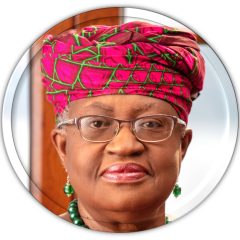
Script for pre-recorded video message
Excellencies, Governors, My dear brothers, Honorable Ministers here present, our Royal Fathers, our leaders in Ohaneze Ndigbo, ladies and gentlemen, all protocols observed.
- I am deeply honoured by the invitation to address you today. Prior engagements unfortunately prevented me from joining you at home, but I am happy to be able to make this keynote speech.
- Let me start by congratulating you on this extraordinary gathering of South East Leaders coming together to consider the economic and social development of the region. I would say it is about time. Difficult times warrant extraordinary measures. Nigeria is going through tough economic times in a context in which the world itself is facing multiple crises and uncertainties whilst at the same time changing rapidly.
- If today’s initiative or gathering succeeds – and delivers concrete results, then I hope it will be the start of a journey to improve the lives of the [more than 23 million] people who live in Abia, Anambra, Ebonyi, Enugu, and Imo states. And it could do much more than that.
- I am convinced that a redynamized Southeast has the potential to become a beacon of development, good governance, and stability in our country. A redynamized Southeast can give our young men and women hope and make them feel part of the changing digitising world. It will minimise their desire to undertake dangerous journeys in the Sahara dessert or Mediterranean Sea. But to give hope we must grapple with and fully own our problems whilst looking to the many available solutions. The Southeast has so many talents and opportunities and I think we can plan how to exploit them all to the benefit of the region and its people.
- On our challenges, I am sure you expect me to mention the big gaps in infrastructure and services. Yes, that is a challenge but I don’t think it is our biggest challenge. Our biggest challenge in the South East is ourselves. We have too often been our own worst enemies. We have allowed ourselves to be divided. We have lost focus, and lost sight of our biggest assets, namely our sense of community and mutual support. We no longer have solidarity. Instead, we have fragmented as a people, and that has made us forget how to work with each other. We don’t support each other. Instead we attack and undermine each other. We are too individualistic and individualism can be good but not when we need to come together as one to enable us deliver.
- But there is a bright side to this challenge. If our big problem is ourselves, it means that the solutions lie in our own hands. If we can build a sense of common purpose and cohesion, we can solve the other problems. To do this, we need to exercise joint leadership – and that is precisely why it is so important that you are taking this step today.
- Our other big challenge is security. This has arisen partly from our fragmentation. Insecurity in our region is sending the wrong signals about whether one can invest in the South East. I want to commend the governors on the recent progress on this front, including mobilising the NSA and the federal government to assist.
- The lesson for us is clear: You cannot have development without security, and you cannot have security without development. And to have both, you need good governance.
- Sustained growth and development are impossible amid repeated sit-at-home orders from one or the other group. To take this region forward, the security problem needs to be solved. The federal government is obviously an important player here, but there is much to be done at the state level and that is why I commend your leadership as our governors. I hope that the relative calm returning will become the norm.
- We also have to admit that the governance of our states can be stronger and deliver more. After all we are Ndi Igbo and we should hold ourselves to a higher standard that delivers more for our people. In that context, it is important to pay attention to our fiscal performance. There is a very good report by the State of States CSO Organization called BudgIt that ranks all 36 states in terms of various aspects of fiscal performance — Dependence on FAAC allocation, growth of internally generated revenue, spending on capital projects versus recurrent expenditures, level of indebtedness, etc. The 2022 edition of the report shows that while our states are not doing too badly, compared to others on many of these indicators, — in fact, Ebonyi ranks consistently among the top 10 in all the indicators whilst Anambra ranks among the top 10 in three of the indicators, our states are not doing too well either. We need to do better on internally generated revenue, we need to keep our borrowing down and improve our capital expenditures. Governors, state legislators, and local government chairs must continuously ask themselves: are we using our FACC allocation wisely, transparently and effectively? Can we generate more revenue internally and how do we do it whilst still motivating our productive factors? Are we taking on too much debt-are we even spending the amounts borrowed effectively? What can we do to improve our spending on capital projects? Keeping these questions constantly in your minds-something I did at the federal level during my seven years as Finance Minister, helps ensure that state and local government monies are channelled in directions that truly deliver for people.
- We know that one of the biggest challenges that we have is infrastructure. Specifically access to electricity and good roads are vital to future progress. People will say that is largely a federal government responsibility and yes to a great extent this is true. But there is much the state can do. We have federal roads and state roads. The federal government has privatized electricity generation and distribution. Yet things have not really improved as much as we would like because of discontinuities in the system. But I see the privatization as an opportunity Southeasterners can seize to improve the situation in the region. One of our foremost citizens Barth Nnaji Has already shown what one man’s ingenuity and drive can do. He may not have got it all right, but he has shown how we can try to solve some of our problems in the power sector. Now that the world is moving to renewables because of climate change, we also have the opportunity to move to off grid solar solutions for our rural areas, whilst still looking to see how we use our gas for urban and industrial purposes. The Rockefeller foundation, together with some partners, is working on solar and battery storage solutions that can attack energy poverty in developing countries. They are looking at working in Nigeria. Can we attract them to the Southeast?
- Let me dwell on a few other opportunities we can seize to develop economic activity in the region. Our biggest resource in the Southeast is our Human Resources. Ndi Igbo di entrepreneurial. Anyi ma olu anyi ma izu afia. Some of the biggest entrepreneurs and industrialists in Nigeria are Igbos. Many micro, medium and small enterprises that thrive in Nigeria, West Africa and elsewhere are run by Igbos. Have you ever been to the market in Niger, Burkina Faso, Cameroon? I have and these places are full of enterprising Ndi Igbo. Then I ask myself, why is the Southeast looking so shabby? Why is our wealth and industry (apart from Aba and Nnewi) not so visible here in the region? How can we harness this entrepreneurship even better at home? Beyond Innoson, a wonderful brother, and a few others can we get the several billionaires we have to invest more in the Southeast so we can create decent jobs for our young people right here. Can we get beyond our individual beautiful mansions, to make ala ndi Igbo loveable and liveable? How can we have an apprenticeship model, what a scholar recently described as “the largest business incubator platform in the world with apprentices emerging with skills, experience and also start up capital” and still see our young people desperate on the streets of Onitsha, Lagos and every small and large city in between?
- I want to suggest right away that we convene a Southeast Investment Forum not for people from outside the region but for our own Igbo business people. In this forum, we should examine what is blocking greater investment in the South East Region and what we can do to lift these blockages. Only after we do that will I suggest that we try a Southeast Investment Forum where we can attract outside foreign investors.
- Let me use this occasion to let you know that yes, there are investors that can be attracted. This is a very important moment in the world where investors abroad are seeking to diversify their supply chains due to the vulnerabilities, they have seen as a result of the pandemic, the war in Ukraine, and ravages of climate change. Certain supply chains are being considered, pharmaceuticals for examples, fertiliser, labour intensive industries and yes, technology. The question for us in the Southeast is can we attract any of this supply chain diversification?
- Technology is where the world is moving to. Artificial intelligence is what the world is talking about now and it is exploding. We already have so many of our young southeasterners involved from Fintech to electric motorcycles. From where I sit at the WTO, we can see that technology and digital are critical. The fastest-growing segment of trade is digital trade, especially digitally driven services trade. This means anything from streaming music and movie services to delivering accounting and back up medical services. Digitally delivered services trade is growing at 8% per year compared to 5% for goods trade. We have the Human Resources, the trained professionals, to benefit from digitally delivered services trade. We also have the creative industries, film and music centered in Onitsha, that can become part of this trade. What we need is to build a digital backbone in the state either cable or satellite to provide the appropriate digital infrastructure. This kind of investment is better done at scale, so I hope Excellencies that you can get together to figure out who to approach and how the supportive policies are to be implemented to attract this digital infrastructure investment. Digital Trade for MSMEs, online education, health and accounting services can provide good jobs and income for our young people. Enugu is already becoming something of a hub for tech and digital in the region. I wonder whether we can build on this to develop our own Enugucon Valley as I know other Nigerian states are working on their version of Silicon Valley, California.
- Regarding pharmaceutical supply chains, the Federal Minister of Health Dr Mohamed Pate is working on this. I suggest that as a region you approach him to see if you can work together to attract vaccines, therapeutics or diagnostics manufacturing facilities here. Aba is already a manufacturing hub in the Southeast along with Nnewi. What goes on in Ariaria industrial market, despite the infrastructure and other challenges never ceases to amaze me. They can label what they produce made in Italy made in Korea or Japan. But the truth is it is made in Aba. I know Governor Abia has his sights set on trying to improve and scale up what is happening in Aba. Again, can we all work together to build up and build out both Aba and Nnewi as industrial hubs? But let me say that there is no reason why factories cannot also be set in Owerri and Abakaliki.
- Let me touch on another important resource we have that we can make better use off. That is the large Igbo diaspora. I was surprised when I took an informal poll of a gathering of people in my village Umuda-Isigwe, Umuahia to see how many families had at least one member in the diaspora, to find that almost everybody put up their hands. The Southeast has one of the largest diasporas in Nigeria, if not Africa. Igbos everywhere from Douala to Durban, London to Leipzig, New York to Newfoundland. Igbos are highly educated professionals, university professors, doctors, lawyers, engineers, accountants, and nurses and also big sports stars in football and basketball in the USA in particular.
- All are willing to support the development of the region, if they could find a stress free way to contribute. Drawing on these diaspora resources, there is no reason why the Southeast could not become a service hub for education or health in the country and the region. Let our professors help develop high quality schools, building on education investments already happening in the region, to attract people beyond the south-east, and let our diaspora doctors build-up specialist hospitals that can draw people from other parts of Nigeria, West and Central Africa and beyond. It may sound far-fetched, but I am convinced we can make the Southeast a service hub for education and health services.
- We can also draw on the diaspora for financing. I don’t know how many of you recall that when I was Finance Minister, Nigeria floated a diaspora bond of $300 million, a first for the country. Drawing on the resources of our diaspora (though we also opened it to any interested investors) we were able to attract hundreds of millions of dollars. The World Bank recorded almost $21 billion in remittance flows to Nigeria in 2022 – About the largest remittance flows in Africa. A significant portion of this must come from Southeast earners abroad. Most of this comes in to support consumption and some forms of investment.
- I am sure the Southeast governors coming together, can do some financial engineering and find a way to float, a Southeast diaspora bond or fund to capture some of these flows and channel them towards financing some of these development priorities. I know that support from the Federal Government – Ministry of Finance will be needed. It seems to me the new incoming team may be open to fresh ideas so why not try to muster their support. You will notice that I have not dwelt on our agriculture or natural resources. This is because that is where we always go first for opportunity forgetting all the other possibilities we have. But I have not forgotten that we have opportunities in agriculture, oil and gas and other minerals. Some of which may be in demand now as the world seeks to decarbonize. But again, value added investment in these areas will need hassle free bureaucracy and on appropriate investment environment.
- Before I conclude let me say that many of these opportunities that I mention will not prove as attractive if the macro-economic environment in the country is unstable. Low growth, high inflation, depreciating naira, and exchange rate volatility make for daunting challenges. The federal government will have to get a handle on overall macroeconomic management for the country to attract both domestic and foreign investment and for the country to grow. They insist they are working on this and we hope for stability soon. In the meantime, Southeast governors must work on the elements they can control, many of them listed above.
- Excellencies, Ladies and Gentlemen let me conclude by saying I am optimistic. Yes, I am optimistic for the Southeast. Your coming together at this time is a great sign. Our Youth and women are vibrant. They are ready to work they, are just waiting for a truly committed leadership. We have what it takes in the Southeast, let us just get on and do it! Igbo Kwenu, kwezuenu!
 Dr Ngozi Okonjo-Iweala
Leave a comment