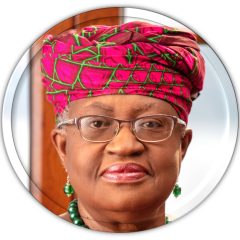
78th UN General Assembly
Trade, debt, and the need for a safety net for trade finance
Secretary-General Guterres,
Excellencies,
Ladies and gentlemen,
Trade is an important tool for fostering debt sustainability and in financing for development more generally – a role recognized in the Addis Ababa Action Agenda.
Exports generate the foreign exchange revenues many developing countries need to service debts. Greater participation in international trade is associated with stronger and more sustained economic growth, higher productivity, and increased job creation, lowering real debt burdens and raising government revenue. Integration into the global economy facilitates the flow of resources, both financial and non-financial, to developing countries. For instance, higher credit ratings allow countries to borrow on better terms – critically important for making green investments viable. Foreign direct investment can bring cutting-edge technology and knowhow alongside capital.
The COVID-19 pandemic and its aftermath dealt a multi-stage blow to debt dynamics, first by curbing tourism revenue and other export opportunities, and then with the rising real interest rates that came with the return of inflation.
A new set of risks comes from rising geopolitical tensions and pressures to turn away from open international markets. Far-reaching economic fragmentation would devastate growth prospects in many developing countries, which would face higher export barriers and worse terms of trade. WTO economists estimate that if the world economy decouples into two self-contained trading blocs, it would lower the long-run level of real global GDP by at least 5%, with some low-income countries experiencing double-digit welfare losses. That’s why we must all push for keeping global markets open, predictable and fair – and for strengthening the multilateral trading system and the WTO, including at our Thirteenth Ministerial Conference next February.
Development financing can stimulate trade and economic integration, creating virtuous circles. Since 2006, the WTO Aid for Trade initiative has helped mobilize $630 billion from bilateral and multilateral donors to build trade capacity and address trade-related infrastructure constraints in developing countries, particularly LDCs.
There is much to be said in this forum about climate and development financing gaps, as well as the importance of prompt debt restructuring, but I will leave that to my colleagues in line with the principle of comparative advantage.
Instead I want to focus on the importance of trade finance, which is essential for trading, as well as generally very low-risk – the shipped goods are the collateral. And yet, businesses in many developing countries face enormous challenges in obtaining trade finance, in part due to unrealistically high country risk perceptions. When companies cannot access trade finance, it often means they cannot take advantage of international market opportunities that they were otherwise well equipped to meet.
The WTO has been working to improve access to trade finance, especially since the credit crunch associated with the 2008-09 financial crisis caused trade finance flows to freeze up. We have worked with partners such as the International Finance Corporation, the Asian Development Bank (ADB), multilateral development banks, and private financial institutions to track financing gaps and other trends in trade finance. Better access to trade finance would mean more trade, which – as we have seen, contributes to improved debt dynamics. More virtuous circles.
Evidence suggests the foregone trade flows resulting from the trade finance gap are considerable. A recent study we did with the IFC in West Africa found only 25% of the region’s goods trade was covered by trade finance. We estimate that raising that to the continental average of 40%, would increase West Africa’s annual trade flows by 8%. Raising it to the global average of 60 to 80%, and lowering costs to international benchmarks, could increase trade flows by 16%, or $26 billion.
Moreover, what trade finance is available goes mainly to a few well-established commodity exporters and bulk importers of essential goods. The rejection rate for SMEs exceeds 50%, and is higher still for women-led SMEs. Exporters of value-added goods also find financing hard to come by. A large majority of traders we surveyed said they no longer bother asking for trade finance, given the high costs, collateral requirements, and likely rejection risks.
Ongoing research in low-income countries in Southeast Asia yields similar findings, and we have no reason to believe the picture is different elsewhere. We are missing opportunities for socioeconomic inclusion, equitable growth, and export diversification.
So let me close by appealing to international organizations, national policymakers, regulators and financial institutions to come together to increase the availability of trade finance, especially for micro, small, and medium-sized enterprises. Let’s bolster the capacity of local lenders, strengthen correspondent banking relationships, and improve data quality and availability. Let’s build a global safety net for trade finance, so that no one is left behind for want of it.
Thank you.
 Dr Ngozi Okonjo-Iweala
Leave a comment