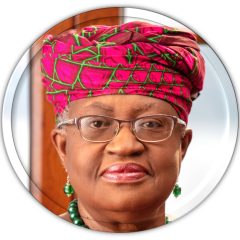
German Federal Foreign Office. Conference of the Heads of German Missions.
Excellency Annalena Baerbock,
Excellencies, ladies and gentlemen,
- Let me begin by saying, it is a great honor to be here –thank you to HE Minister Annalena Baerbock and the Federal Ministry of Foreign Affairs for the invite. Minister Baerbock has made German Foreign policy famous with her feminist foreign policy. I also want to thank Ambassador Katharina Stasch for her diligence in getting me here and Ambassador Bettina Waldmann of the WTO.
- When I first received the invitation, I thought my task here would be straightforward.
- The Federal Republic has been a star performer of the post-1945 international economic order.
- Germany, its highly productive companies, and its labour unions used continental and global market integration first to drive the postwar Wirtschaftswunder (“economic miracle”) and since then to achieve strong – and relatively equitable – growth in living standards.
- More recently however, the COVID-19 pandemic and the war in Ukraine have revealed vulnerabilities in the way global production and trade was organized – and Germany turned out to be heavily exposed. I was in Kyiv three weeks ago to accept the ratification of the Fisheries Subsidies Agreement and I could only wish this war would end.
- The vulnerabilities I mentioned have less to do with trade per se than with excessive concentration in some products and trading relationships. The right response is to deconcentrate, diversify, and deepen global trade, by bringing more countries and communities from the margins to the mainstream of the international division of labour. Extending global production and trade networks to Africa, Latin America and Asia would make them simultaneously more resilient to localized shocks and more inclusive in socioeconomic terms.
- This process, what we at the WTO have dubbed ‘re-globalization’, needs leadership and engagement from countries like Germany – by its government and by its private sector.
- Germany is already stepping up in this regard:
- Chancellor Olaf Scholz has been a powerful advocate for greater diversification and resilience within an open, rules-based global economy. We thank him for this advocacy and support.
- Surveys by the European Bank for Reconstruction and Development and the Ifo institute indicate that businesses in Germany are looking to add new suppliers in other countries.
- This is good, and I would have concluded by urging you to continue to match this advocacy with action by furthering work with governments, the German and European private sectors, and trading partners to enlarge supply chain diversification by bringing in regions and countries with good macroeconomic and investment climates that have been left on the margins of global production and trade. I would have admitted to you that WTO needs to reform to help drive this diversification.
- But as it turns out, this direction for my speech isn’t entirely what the organizers had in mind for today, and my task is therefore not done.
- Instead, I have been asked to step out of my role as Director-General of the WTO and provide a frank account of how the world is changing, what it means for perceptions of Germany and Europe across the developing world, and the implications for your efforts to build strong partnerships with other countries, particularly in the Global South.
- So let me start by looking at how the global balance of economic power has shifted in recent decades. Please note I am an economist so will focus mainly on the economic aspect.
- Whatever metric you use, developing and emerging economies have sharply increased their footprint in the world economy, thanks to decades of consistently faster growth than advanced economies.
- Trade was a major driver of this faster growth, so let’s go back to 1995, when the GATT transformed into the WTO as we know it, and China, Eastern Europe and India were entering global markets following market-oriented domestic reforms.
- In 1995, purchasing power parity terms, developing and emerging economies accounted for 42% of global GDP, while advanced economies made up 58%. As of 2022, these shares have exactly inverted.
- In fact, narrowing this down to the Group of 7 leading advanced economies, they now collectively produce about 30% of global output, again in purchasing power parity terms. The BRICS bloc of Brazil, Russia, India, China and South Africa accounts for 32% – slightly more – and will reach 37% with the addition of Argentina, Egypt, Ethiopia, Iran, Saudi Arabia and the UAE after the recent summit in South Africa.
- At market exchange rates, the shares are different, but the trend remains the same. Developing and emerging market economies accounted for 19% of global GDP at current prices in 1995, but have significantly increased their share to 43% in 2022.
- The growing importance of large emerging economies is visible in the trade data as well.
- G7 economies represented 46% of world merchandise exports in 2000, but only 28% last year. Over that time, their share of world imports fell from half to about a third.
- Meanwhile, the trade share of emerging economies has risen substantially.
- Services trade shows similar trends.
- As we can see, the world has undergone more than one zeitenwende. But one stubborn constant is that many poorer developing countries remained on the margins of global economic integration – and have thus not shared adequately in the ensuing prosperity. Least developed countries, for example, account for nearly 15% of the global population, but their share of global GDP has remained stuck below 1.5%, and their share of world trade hovers around 1%.
- I want to highlight three takeaways from all this:
- First is that no single bloc of countries dominates the global economy today, and therefore, the case for effective, cooperative multilateral governance is overwhelming – on trade, finance, taxation, and on tackling global commons challenges like climate change. Note that despite the changes in shares of global GDP, multilateral economic governance has barely changed to reflect the new economic weight of developing and emerging economies. We need to update multilateral institutions to reflect the world as it is today, and how it will be tomorrow. For the multilateral trading system, this means delivering on ongoing WTO reform efforts that deliver more benefits to developing economies, whilst also delivering for developed countries. This includes reforming and restoring a fully functional dispute settlement system.
- Two, a major goal for the years and decades ahead must be to foster growth and development in the countries and communities that have been left behind.
- Third is that developing and least developed countries interested in trade, investment, aid, and security partnerships have many more places to turn than was the case twenty or thirty years ago. The North might once have been the only game in town, but those days are over.
- A recent article by Alec Russell in the Financial Times dubbed this an ‘à la carte world’, in which countries like Kenya were being simultaneously wooed by the US, China, Russia, the European Union, the UK, India, and even Iran.
- In this world, countries can advance their interests on trade, security, and so on by working with multiple partners at once. This is the world in which you, Excellencies, need to compete. I term it a bit differently when discussing this with African leaders and policymakers. I tell them – jokingly, but with an element of truth – that this is the time to practice polyandry. Marry all of your suitors and get the best you can for yourself out of all of them!
- Today’s world may no longer offer yesterday’s certainties, but there are opportunities for middle powers like Germany – and an important role for persuasion and on-the-ground engagement by diplomats like you.
- Bilateral trade, investment, and aid patterns illustrate how this new world emerged.
- At the turn of this century, 65% of African exports went to either the United States or the European Union. By 2019 this share had declined to 38%.[1]
- The European Union is still Africa’s biggest trading partner, but China is on track to overtake it by 2030.
- I want to recognize the tremendous efforts the EU has made to negotiate economic partnership agreements with African countries, though I should say that not all countries favour this. EPAs are now in place with 14 African countries, with more in the implementation pipeline. But the data suggests that their impact on trade has been limited overall. If we leave out oil, gas, and coal, for which prices are volatile, African exports to the EU were worth US$91 billion in 2011, and US$94 billion in 2021, before ticking up to US$102 billion last year. Again leaving out oil, gas, and coal products, EU exports to the continent actually declined a bit – from $161 billion in 2011 to $149 billion in 2022. There are individual success stories – Morocco boosted its non-oil exports to the EU by 90%, and Rwanda by 49%, just as the EU boosted its exports to Senegal by 43% and to Morocco by 47%. But these are limited. Trade in some sectors has grown while others have declined. Nevertheless, there is some truth to the perceptions that the EPAs have not made a big difference for Africa’s access to European markets – perceptions exacerbated by the use of trade remedies, regulatory and other non-tariff measures, and now what are seen by Africans as environmental protectionism when they consider deforestation measures or the kick in of CBAM. Coupled with the visible availability of more EU agrifood products within some African markets as they extend reciprocal access to Europe, this has fuelled cynicism in Africa about the trading relationships.
- Turning to foreign direct investment flows, in 2021 the value of outward FDI flows from the European Union to all destinations was $436 billion, and $379 billion from the US, according to OECD estimates. But FDI outflows from emerging economy members of the G20, at $310 billion, were not too far off, with China accounting for a bit more than half.
- Focusing on investment into Africa, between 2005 and 2015, developed countries accounted for roughly half of FDI inflows to the continent. But that share dropped to less than 20% between 2018 and 2021.
- We see similar trends with development assistance, where funding from non-traditional donors, particularly China, has increased sharply. In 2000, G7 economies provided nearly 20 times more official development financing than China.
- But according to AidData, a group at the College of William and Mary in the United States, between 2013 and 2017, the first five years of the Belt and Road Initiative, China provided $428 billion in official financial flows to developing countries.
- Over the same time period, the USA provided $185 billion in official development assistance and other official flows, and Germany $125 billion. The total for all G7 economies was $574 billion.
- With regard to infrastructure spending, China has in recent years taken a very sizeable lead.
- According to analysis by the Center for Global Development, between 2007 and 2020, China’s two main overseas development banks invested more in African infrastructure projects than the combined total of the World Bank Group, the African Development Bank, the European Investment Bank and bilateral development finance institutions from the US, Japan, Germany, the Netherlands, and France.[2]
- China’s spending has dipped since the start of the COVID-19 pandemic, with annual engagement since 2020 in the $60 to $70 billion range, down from nearly double that prior to COVID-19.
Believe me all this has not been without strain and costs for some of the countries receiving these flows, and for China itself. Serious debt overhangs partly as a result of Chinese debt, or loss of assets pledged as collateral, have been documented for a range of countries from Zambia to Sri Lanka. For China itself, there is growing realization that such lending can be costly to the Chinese economy when borrowers cannot repay loans and Beijing is pressed to forgive debts. At a time when China’s economy is showing signs of faltering, the situation becomes even more difficult.
- Nevertheless, it is a reality across the African continent, for example, that people see the impact of new or improved physical infrastructure built with Chinese assistance. I am not diminishing the moral and economic value of investments in human infrastructure, such as in health and girls’ education, made by countries of the North. But, I can tell you that in my own country, Nigeria, people know that the airport terminals in Abuja and Lagos, whose loans on concessional terms I negotiated, were made possible by Chinese financing.
- Just as China has reached out with infrastructure, other emerging economies have been reaching out to developing countries in different ways: Russia with military support, India with food, digital public infrastructure, and even physical infrastructure like the Nyabarongo I Dam and hydroelectric power station in Rwanda.
- Europe and the United States are playing catch-up with the Global Gateway and the Build Back Better World initiatives.
- I know that Europe in particular has been preoccupied for much of the past two decades with building infrastructure to support internal integration following the expansion of the EU. European governments are also constrained on one hand by a populist right that sees support for foreigners as coming at citizens’ expense, and on the other by civil society concerns about investments in poor countries that might go badly wrong.
- Nevertheless, Western governments have missed an opportunity.
- Falling short on climate finance pledges was not just bad for people and the planet; it sent a damaging political signal.
- At the Summit for a New Global Financing Pact hosted by President Macron in June, the disappointment was plainly audible among leaders such as Prime Minister Mia Mottley of Barbados, President Lula da Silva of Brazil, President Cyril Ramaphosa of South Africa, and President William Ruto of Kenya.
- Recent unilateral protectionist measures by some developed countries, coupled with a more general reticence about the multilateral trading system and the WTO, are seen as cynical and hypocritical by developing countries. The latter feel that rich countries, having benefitted immensely from the multilateral trading system to develop their economies, now no longer want to compete on a level playing field, and would prefer instead to shift to a power-based rather than a rules-based system. Please be clear that I am not commenting on the merits of this analysis one way or another – I am simply sharing views that have been expressed to me by policymakers from the Global South.
- The EU has stepped up recently during the pandemic by working with African countries to invest in vaccine manufacturing. This is great and most welcome. It is an example of what African countries would like to see. Partnerships to boost manufacturing and create jobs, rather than money paid towards repatriating irregular migrants. One question, incidentally, is why there cannot be more win-win MOUs to bring workers whose labor is needed into Europe in a rational manner, so that they can work and then go back home?
- Many developing countries are open to outreach from the West. Western values are still admired and treasured. But the combination of limited funds with a lot of conditionality has been less than attractive.
- Larry Summers made headlines during the IMF/World Bank spring meetings when he quoted someone from a developing country who said, “Look, I like your values better than I like China’s. But the truth is, when we’re engaged with the Chinese, we get an airport. And when we’re engaged with you guys, we get a lecture.”
- A survey of African policymakers commissioned by the Friedrich Naumann Foundation yielded some fascinating insights on how EU engagement is perceived.
- The EU outscored China on delivery of high-quality products and services, on better treatment of Africans, on environmental standards, working conditions, and anti-corruption.
- But China outperformed the EU on quick decision-making, support for infrastructure development in Africa, timely completion of projects, and refraining from meddling in the internal affairs of African partners.
- In the words of Stefan Schott, the foundation’s project director in eastern Africa, “Europe’s belief in the superiority of its own values contrasts with the pragmatic view of Africans on the performance and behaviour of the two partners (the EU and China). A road that is completed after a short construction period by the Chinese is also a value in the perception of Africans – and more concrete than some European projects to promote democracy, human rights or sustainability.”
- I am personally convinced that airports and good governance are not an either-or proposition: if done right, it is possible to have more of both. Conditionality can help deliver reform – but developing countries will only have a reason to listen if those conditions come with truly transformative investments.
- Today, as Europe confronts serious challenges on its borders with the ongoing war in Ukraine, and as it contends with geopolitical tensions between the US and China, as well as its own tensions with China, how will it respond? Will it turn inwards, hurting both countries of the South and its own future prospects? Or will it reach out and work hand in hand with these countries, especially in Africa, to foster growth, job creation, and a more inclusive, more sustainable global economy?
- I am optimistic and convinced Europe and Germany will do the latter. Why? Because European leaders are increasingly cognizant of what is at stake – Chancellor Scholz and President Macron are two prominent examples, as are European Commission President Ursula von der Leyen and EU Council President Charles Michel.
- As I mentioned earlier, Chancellor Scholz is talking about diversifying supply chains for fertilizer and pharmaceuticals to Africa and other developing regions. He is a champion of our notion of re-globalization. This is a promising way forward for developing countries, and for the future of global growth given ageing populations in many advanced and emerging economies.
- So Excellencies, my charge to you then is “How will you buttress and carry forward the efforts of these leaders on the ground?” What is your concrete offer in the countries where you serve? How are you fostering North-South dialogue and promoting mutual understanding? If you are serving in developing countries, how are you attracting your private sector to invest and engaging your host government to provide a sound macro and investment environment? If you are serving in countries of the North, how are you helping forge triangular partnerships with developing countries, your host country and Germany? What are you doing to help preserve the open, rules-based trade that is a necessary part of the enabling environment for diversification and re-globalization to succeed?”
- I am now coming to the close, but before concluding, I must come back to the WTO. Multilateral commitments have long served as an external anchor for countries’ own domestic economic reforms and agendas – and they can continue to do so.
- The WTO is one important forum that can help reimagine and rebuild the relationship between Northern and Southern countries and we have started.
- Closing on ongoing initiatives in fisheries subsidies, food security and agriculture, services, digital trade, and support for women and MSMEs can help build that bridge to the South that we all want! Germany’s continuing support for a strengthened WTO will play a critical role in helping us get there.
- Let me then conclude, Excellencies, by coming back to where I started. The balance of economic power in the world is shifting, and this creates dislocations and uncertainty. Under these circumstances, it is easy to become pessimistic, and to turn inwards to oneself, or sideways to a small circle of friends. But I want to urge you to look at the world differently: to see the opportunities among these challenges, to reach out to those who might be seen as on the other side of a geopolitical fault line, and to forge the necessary partnerships with them that will enable the job creation, partnerships and shared prosperity we all want.
- Please know that as multilateral institutions, we are here to support you to make these partnerships happen to change the world as we see it to the world as we desire it to be.
- Let’s get to work, together!
- I wish you every success in this conference.
- Thank you.
[1] https://www.imf.org/-/media/Files/Publications/DP/2023/English/TIIAEA.ashx
[2] https://www.cgdev.org/sites/default/files/stuck-near-ten-billion-public-private-infrastructure-finance-sub-saharan-africa.pdf
 Dr Ngozi Okonjo-Iweala
Leave a comment