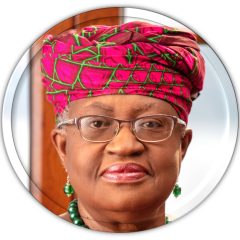
Global Economy Prize 2023: How to make trade work for Africa (Challenges and opportunities for Africa in global trade)
H.E. Monika Heinold
Dr. Ulf Kämpfer
Mr. Knud Hansen
Professor Moritz Schularick (or since we’re in Germany, I should say Professor Dr. Moritz Shularick)
Excellencies, ladies and gentlemen.
- Thank you so, so much. It is an enormous honour to receive this prize. I am humbled to walk in the footsteps of previous awardees, and to be sharing the stage with two of Africa’s most remarkable – and distinguished – economists.
- Their work and experiences need no introduction, but they are directly relevant to the theme I will be addressing here, namely how we can make trade work for Africa, for the continent to thrive, develop, and prosper.
- As Professor Wantchekon has done so much to demonstrate, political and social factors do much to shape a region’s economic progress, and yet, history is not destiny. Policies can improve. Political coalitions can be built for investing in public goods.
- Well-functioning markets are a critical part of the toolkit for growth and development across the continent. Doctor Gabre-Madhin demonstrated this when she founded the Ethiopia Commodity Exchange. By creating the infrastructure for grain markets to function properly, she bolstered the livelihoods of millions of smallholder farmers.
- Making trade work for Africa will involve a great deal of action at the domestic and continental levels. But the international enabling environment will be critical as well. And I want to take a moment here to point to the cutting-edge work the Kiel Institute does to help us understand the global economy and where it is going.
- The Kiel Trade Indicator helps researchers and policymakers understand in real time how trade is evolving – something that has been particularly useful amid the shocks of COVID-19 and the war in Ukraine. The African Debt Database put together by Christoph Trebesch and David Mihalyi is another example of the kind of work being done here. Debt pressures are weighing on growth and public investment across the continent, and this comprehensive dataset on external borrowing by African governments will be a valuable tool as we seek proactive solutions for avoiding a repeat of the lost decades of the not-very-distant past.
- My focus today will be on Africa’s enormous potential – and the role for trade in realizing that potential. But I want to start by recognizing some of the challenges that stand between Africans and a more prosperous, more inclusive, and more sustainable future.
- While many economies on the continent have achieved high growth rates, they have struggled to sustain them long enough for them to be truly transformative. Over the long run, the effects add up.
- As recently as 1993, per capita incomes were higher in Sub-Saharan Africa than in developing East Asia and the Pacific. But since then, incomes in the latter rose sharply, from $533 in current dollars to nearly $9800 in 2021, according to the World Bank. Over the same time, per capita incomes in sub-Saharan Africa rose from nearly $600 to $1633.
- The shocks from the COVID-19 pandemic and the war in Ukraine have reversed a quarter-century of convergence between incomes in rich and poor countries. Sub-Saharan Africa was converging more slowly than other regions, and has been quicker to diverge – per capita incomes began to decline even before the pandemic.
- This year, the IMF estimates that Sub-Saharan Africa’s economy will expand by 3.6%, followed by 4.2% growth in 2024. This is above the global average. But emerging markets and developing economies as a whole are expected to register average growth of 3.9% this year and 4.2% next year. Emerging and Developing Asia is set to expand by 5.3% this year and 5.1% next year. At these rates, Africa will hardly narrow the income gaps.
- The picture for trade is similar. The WTO currently projects global goods trade to grow 1.7% in 2023, before picking to up 3.2% next year. Within this, Africa’s exports are projected to shrink by 1.4% this year, the only region featuring a decline, before growing by 1.4% in 2024. In comparison, North America and Asia are registering substantially stronger export performances.
- Africa accounts for only about 3% each of global GDP and goods exports, and its export basket remains heavily dependent on primary commodities.
- In addition, intra-regional trade is lower than in other regions: the share of intra-African trade in exports rose from 10% in 2000 to nearly 19% in 2015 before falling back to 13% in 2021, compared to 59% in Asia, 69% in Europe and 39% in North America.
- Most African economies export only a handful of relatively unprocessed agricultural or mineral products to a limited number of markets, making them extremely exposed to external shocks.
- Taken together, these figures illustrate that trade is not the engine of income growth for Africa that it could be – with direct implications for the living standards of people on the continent.
- Sluggish per capita income growth is an important reason why extreme poverty is in danger of becoming an increasingly African phenomenon. As of 2019, Sub-Saharan Africa accounted for about 60 percent of the people living on less than $2.15 a day, with the rest mainly in South Asia. On current trends, after the shocks of the past three years, the global goal of ending extreme poverty by 2030 seems out of reach. By then, 574 million people—nearly 7 percent of the world’s population—are on track to still be in extreme poverty, nearly 90% of them in Africa.
- The continent’s economies need not only to grow faster, but to sustain rapid growth for a prolonged period. Increased trade has been a key element in all sustained high growth stories. We have seen how it worked in East Asia and elsewhere.
- I want to recognize that a major cloud on the horizon here is the increasingly fashionable talk of geopolitically-driven decoupling . This would have dire consequences for the world’s poorest economies in general, and for Africa in particular: uncertain market access, fewer technology spillovers and higher transaction costs.
- WTO economists estimate that if the global economy decouples into two isolated blocs, it would reduce long-term real global GDP by at least 5%. Many low-income countries would be looking at double-digit welfare losses.
- On the more positive side, there is little evidence of decoupling in the data. Global goods and services trade was at a record $31.4 trillion last year. Despite geopolitical tensions, goods trade between the US and China, and between the EU and China, was at record highs.
- Provided we can keep international markets broadly open and predictable, I am convinced that Africa today has a window of opportunity to use trade to drive growth and development. This window of opportunity is the product of structural and demographic trends, ongoing policy initiatives, as well as shifting geopolitical currents.
- First, in an aging world, Africa’s young population offers both the workforce and the markets of tomorrow.
- Second, continental economic integration, embodied by the African Continental Free Trade Area, offers the prospect of a large and unified market of 1.4 billion people, which would encourage investment and foster the creation or regional value chains.
- Third, the rapid growth of trade in services delivered digitally, over computer networks, offers a new set of opportunities, particularly for tech-savvy young people and women-owned businesses. Between 2005 and 2022, world exports of digitally delivered services grew by an average of 8.1% each year – compared to 5.6% for goods. Exports of these services were worth $3.82 trillion last year – equivalent to 12% of total world goods and services trade. Services already account for over half of economic output in Africa. Services trade could help the continent diversify and become more resilient to external shocks.
- And finally, the ongoing rethink of the way certain supply chains are organized, in light of the vulnerabilities exposed by the pandemic and the war in Ukraine, creates opportunities for the continent to attract investment.
- While some have responded to shortages and bottlenecks by calling for de-globalization and re-shoring in the name of ensuring supply resilience, we believe a more effective path to that goal lies in more diversified and deconcentrated international markets.
- At the WTO we are calling this ‘reglobalization’. This process had started even before the pandemic, as businesses sought to manage risks and lower costs. As it picks up speed, the challenge will be to broaden the process geographically to encompass a wider range of potential suppliers.
- By bringing more parts of Africa from the margins of global production networks to the mainstream, we can simultaneously foster stronger growth, greater socioeconomic inclusion, and increased supply resilience.
- In short, ladies and gentlemen, this is a window of opportunity we cannot afford to miss.
- Instances of global market integration on the continent provide a glimpse of what the future could look like.
- In manufacturing, some African countries have started to attract some supply chain investment, such as Morocco or pre-conflict Ethiopia, albeit not on a scale comparable to places like Vietnam or Mexico.
- In services – particularly the digital space – we see the burgeoning tech startup ecosystems from Lagos’s Yabacon Valley to Nairobi’s Silicon Savannah.
- I haven’t made it to the supermarket here in Kiel, but in Geneva you always find a few high-value African agri-food products, from specialty vegetables to cut flowers.
- The green transition offers a new set of commercial opportunities for Africa, from the growing need for rare earths and critical inputs into green technologies, to rising consumer demand for environmentally responsible products.
- We can produce more in Africa to sell to ourselves and to the rest of the world.
- But one major barrier to further integration, within the continent and with the rest of the world, are extremely high trade costs – a term that encompasses tariffs as well as transport, travel and digital connectedness costs, policy and regulatory differences, and information and transaction costs. In fact, African trade costs are the world’s highest.
- African countries face trade costs equivalent to a 354% tariff – one and a half times the level in high-income countries. For intra-African trade, the costs are one-fifth higher – equivalent to a 435% tariff.
- Transport infrastructure and physical access to markets matter a lot here, as Professor Wantchekon’s research has shown.
- Africa can do more to help feed itself and feed the world. Cereal yields on the continent in 2021 were half those in India, under a third of those in China, and nearly one-fifth of those in the US. A new McKinsey report estimates that Africa could produce two to three times more cereals and grains than it does today, which would add 20 percent more cereals and grains to current worldwide output. But realizing the continent’s full potential on agriculture will require major investment: McKinsey estimates sub-Saharan Africa will need eight times more fertilizer and six times more high-quality seed, along with investments in irrigation and basic storage, not to mention cold-chain facilities. And as we have seen, higher productivity will need to be accompanied by better rural infrastructure, and better connections to local, regional, and international markets.
- Trade costs and policy barriers are also relevant for digital trade. Although Africa pioneered mobile money and is home to many successful tech startups, the continent accounted for just 0.9% of world exports of digitally delivered services in 2022 – a share that has held roughly constant since 2005. On the plus side, this means there is ample room for Africa to increase its market share. But we have to do better. Despite major improvements in access, the digital divide remains substantial. Data from the International Telecommunications Union suggests that only 36% of people in Africa were using the internet in 2022, whether due to gaps in mobile network coverage, affordability issues, or lack of skills or awareness. At the same time, 55% of the continent’s people between the ages of 15 and 24 were online, pointing to the enormous promise of the digital space to drive job creation for the fast-growing youth population.
- On top of high physical trade costs and digital connectivity limitations, there are costs associated with unavailable or expensive trade finance. A joint study last year by the WTO and the International Financial Corporation found that in West Africa, only 25% of trade is supported by trade finance, compared to a world average of between 60% to 80%.
- The good news is that efforts to address these costs are underway, and the impacts are already starting to become visible.
- Since I’m the Director-General of the WTO, let me start by pointing to the ongoing implementation of our Trade Facilitation Agreement, which seeks to simplify border procedures and cut red tape.
- We are already seeing examples of how cooperation among border agencies has slashed processing times for trade documents, reducing delays and hence costs:
- In Tanzania, processing time went from 2-3 hours down to 5 minutes. As a side benefit, this helped reduce smuggling and has doubled official customs revenues (to 4 billion Tanzanian Shillings, or $30 million).
- Customs cooperation on the Uganda-Kenya border reduced border transaction times and costs by as much as 70%.
- Provided it is implemented effectively, the AfCFTA has the potential to be truly revolutionary for Africa’s economic prospects, enhancing trade within the continent and with the rest of the world. Further reducing trade costs willpave the way for regional value chains in sectors like pharmaceuticals, where the pandemic taught us the hard way that having more production capacity on the continent would be good for Africa and for the rest of the world.
- In ongoing negotiations at the WTO, over 110 members, including several from Africa, are working towards an agreement on Investment Facilitation, which promises to simplify procedures and lower costs for prospective inward investment. Nearly 90 members – 7 of them from Africa – are negotiating a basic set of global rules for digital trade, which will reduce uncertainty and transaction costs. Given that the future of trade is digital, we are pushing for more African countries to join the initiative as a means to expand opportunities for their tech-savvy young people.
- One negotiating area where we need to improve is updating the WTO rulebook for agriculture trade. Talks have advanced little over the past twenty years. High levels of subsidies and protection persist in the sector, which can disincentivize much-needed investment in bolstering agricultural productivity and market connections. Members are currently looking at the issue through the lens of food security, and I hope they will be able to start finding a way forward by our Thirteenth Ministerial Conference in Abu Dhabi next February. In the meantime, we are working with FIFA, Afreximbank and othe international agencies to connect cotton producers in Benin, Burkina Faso, Chad, Mali and Cote d’Ivoire to the global sports apparel value chain, a $200 billion market.
- This last initiative underscores the importance of complementary support on the supply side for Africa to realize its trade potential.
- For instance, organizations like the International Trade Centre, the Standards and Trade Development Facility, and the Enhanced Integrated framework are helping micro, small, and medium-sized enterprises, many of them women-owned, tap into international market opportunities by meeting health and safety standards and other export market requirements.
- With regard to trade finance, the joint WTO/IFC study shows that West African exports trade would be 16% higher if access to trade finance were in line with the global average. Afreximbank, the IFC, the AfDB can help create a more diversified and efficient pan-African trade finance market.
- At the WTO we are working on a pilot project with the World Bank to help African countries update regulatory frameworks and attract investment in developing digital infrastructure.
- Before closing, I want to appeal to all of you here to continue to make the case for an open multilateral trading system, anchored in a reformed and reinvigorated WTO. An open and predictable external environment is essential for making trade work for Africa.
- We can, and we must make trade work for Africa. In our increasingly shock-prone world, a deeper, more diversified global economy that works better for Africa and Africans will work better for everyone, everywhere.
- Thank you very much.
 Dr Ngozi Okonjo-Iweala
Leave a comment