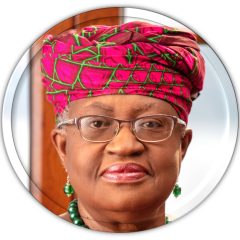
Principal Sir Anton Muscatelli, faculty, students, and the entire University of Glasgow community.
Thank you so much for this immense honor.
To receive an honorary degree is always special. But as an economist, it is a particular thrill to do so here, at the university where Adam Smith studied, taught, and developed insights that to this day illuminate our understanding of the economy and commercial exchange.
I don’t want to leave anyone here with the impression that I think Glasgow’s contributions to economics ended in the 18th century. Faculty members and researchers continue to influence economic debate and policy.
- Sai Ding’s work has helped us better understand corporate investment choices in China.
- Anna Bogomolnaia and Hervé Moulin have advanced the frontiers of mathematical economics.
- And of course Sir Anton’s own work on monetary and fiscal policy and central bank independence could not be more relevant today.
But since I am here as Director-General of the World Trade Organization – and because it’s his 300th birth anniversary this month – I want to return to Adam Smith.
We now hear a growing chorus for a retreat from global trade in favour of re-shoring, near-shoring, and friend-shoring. This risks giving up on the productivity gains Smith was perhaps the first to associate with competition, specialization and scale.
WTO economists estimate that if the world economy decouples into two isolated trading blocs, it would reduce long-term global GDP by at least 5% from the current trend. That’s worse than the fall in output experienced by advanced economies after the global financial crisis fifteen years ago.
But as is too frequently overlooked, Smith was no market fundamentalist.
- He warned that that businesses could collude against the public interest to raise prices and distort policy.
- Long before the concept of public goods was explicitly articulated, he urged governments to invest in works for which the benefits to society would exceed the potential private returns.
- Smith saw sympathy towards other people as a prerequisite for civilized life. He was concerned with poverty and inequality, writing, and I quote “No society can surely be flourishing and happy, of which the far greater part of the members are poor and miserable.”
Many of the big challenges the world is grappling with today deal with socioeconomic exclusion, insufficient investment in public goods, and a lack of solidarity towards our fellow humans.
So let’s hang on to Smith’s best-known insights, while taking on board some of his less appreciated advice.
Markets are a powerful tool – but what really matters are people’s lives.
Again, thank you very, very much.
 Dr Ngozi Okonjo-Iweala
Leave a comment