24 June 2022
Excellencies, Presidents,
Honourable Prime Ministers
Baroness Patricia Scotland, Secretary General of the Commonwealth
Friends
Good afternoon.
It is truly an honour to be with you this afternoon. And I must say that I feel especially happy that the Commonwealth Heads of Government Meeting (CHOGM) is taking place in Rwanda, a country with which I have been associated for more than 3 decades since my early days at the World Bank. I would like to congratulate H.E. President Kagame and his lovely wife for being such gracious hosts. From the energy and excitement that I feel since arriving yesterday, I have no doubt that this Commonwealth Heads of Government Meeting will meet all its objectives.
Let me thank our other host, Baroness Patricia Scotland, for her sterling contributions to the Commonwealth and for the opportunity to share a few words on the outcomes of the WTO Ministerial Conference that concluded in the early hours of last Friday morning. The Commonwealth Secretariat and the WTO recently signed an MOU to work together so it is fitting that the WTO is also here.
The 12th WTO Ministerial Conference that just took place on 13-17 June has delivered results beyond expectations that will make a difference for people around the world. The conference repeatedly postponed for almost five years brought together Ministers from across the globe, and you would be happy to know that virtually every Commonwealth country represented here is a member of the WTO so the Commonwealth was well represented and played a crucial role in the success of the conference.
The fact that the Vice-Chairs and Minister-Facilitators who presided over the conference were all from Commonwealth countries: Australia, Barbados, St Vincent and the Grenadines, Kenya, Uganda, and New Zealand, this demonstrates the importance that your members place on the multilateral system. Your active engagement is no surprise as the Commonwealth is known for its support of the rules-based order and commitment to multilateralism.
I am especially grateful to Minister Jerome Walcott, Minister of Foreign Affairs and Foreign Trade of Barbados, vice chair of the Ministerial; Minister Don Farrell, Minister for Trade and Tourism of Australia, vice chair; Minister Harriet Ntabazi, Minister of State for Trade of Uganda, vice chair; Minister Keisal Peters, Minister of State with Responsibility for Foreign Affairs and Foreign Trade of Saint Vincent and the Grenadines, Facilitator; Minister Kamina Johnson Smith, Minister of Foreign Affairs and Foreign Trade of Jamaica, Facilitator; Minister Damien O’Connor, Minister of Trade and Export Growth of New Zealand, Facilitator; and Minister Betty Maina, Cabinet Secretary Trade and Enterprise Development of Kenya, Facilitator. We were also honoured to be joined by the SG Commonwealth Baroness Patricia Scotland.
MC12, as it is called in WTO parlance, was a critical inflection point for the WTO and the multilateral trading system. After years of struggling to deliver on its mandate of helping to raise living standards, increase real incomes, and promote sustainable development, I truly believe that the positive results from MC12 sets the organisation on a path that can, firstly, restore confidence in the system and positively impact on the lives of people across the Commonwealth.
Before I share with you some of what we achieved at MC12, let me express my hope that I can continue to count on you and your delegations in Geneva as we forge ahead.
When we started on the road to MC12 there was not much optimism that we could achieve outcomes. The track record of the WTO in this regard has unfortunately not been a good one. There has been a dearth of multilateral agreements. The last MC11 in Buenos Aires was seen universally as a failure as it ended with no outcomes but succeeded in entrenching the division and mistrust that pervade interaction among the 164 WTO Members. So, expectations for MC12 were very low. In the weeks leading to the conference, I told people that if we were lucky, we could deliver one or two agreements. But with hard work, God’s grace, your support and the support of your Ministers and Ambassadors we delivered an unprecedented six multilateral outcomes after six days of tough negotiations, the last 48 hours of which was nonstop since I agreed with the conference chair and vice chair that no one could go home until we delivered.
The first deliverable was to ensure that we start a process that would lead to WTO reform. The WTO’s core negotiations, monitoring and dispute settlement functions need to be reformed and brought up to 21st century realities. As part of this reform agenda, Members singled out the WTO dispute settlement system for work and updating by 2024. This is important as the appeals function of the dispute settlement system has been paralysed for a few years now due to the blockage of the appointment process.
Another area where we delivered is on a response to the pandemic and preparedness for future pandemics, including an outcome on the TRIPS waiver that would allow for the manufacture and export of vaccines using proprietary IP under certain conditions. This is a big win for Commonwealth countries that have the capacity to produce vaccines or are planning such capacity because they can make use of this Decision. Cumulatively, the Commonwealth registered 69,382 cases of COVID-19 per million persons, and 727 deaths per million, broadly reflective of the global outcome. While your public health response must be commended, the pandemic had devastating impacts on Commonwealth economies. With this WTO outcome, we will be better prepared in the future.
We also delivered an agreement that will tackle harmful fisheries subsidies that deplete our fish stocks and oceans. This agreement will help to curb illegal, unreported and unregulated fishing on our high seas and take a first step towards curbing over-fishing and overcapacity. It will also increase transparency of the subsidy programmes of Members. We also recognised that not all Members have the resources to implement parts of the agreement, particularly those relating to transparency, so we have introduced a fisheries capacity building fund of $10 million to assist. This is a ground-breaking agreement that will shine a light on the subsidy programmes that undermine our marine resources.
Another important outcome agreed by Members is a commitment not to impose export prohibitions or restrictions on foodstuffs purchased for humanitarian purposes by the World Food Programme (WFP). This is critical, particularly at a time of growing food insecurity across the globe.
We also delivered a decision on food security that committed members to take concrete steps to facilitate trade and improve the functioning and resilience of global food markets including for cereals, fertilizers and other agricultural inputs. Export restrictions and prohibitions exacerbated global food prices. So, refraining from this is an important contribution to reining in prices in today’s global inflation environment.
Finally, there was an agreement on the extension of a moratorium on customs duties on electronic transmissions. This will allow software, electronic games, music and movies, for example, to continue to be sold and purchased across borders without customs duties. This is an important outcome for businesses large and small that appreciate that customs duties on e-commerce transmissions will be both difficult to implement and have negative implications for both sales and innovation.
So, what is next? What do I need you to do to take advantage of these new agreements and decisions?
First, regarding the partial TRIPS waiver, this is ready for immediate implementation since it is a decision that can be put to work by Members with manufacturing capacity or with plans to build such capacity soon, as I mentioned earlier. The partial waiver is good for a duration of six years. But you would need to have the appropriate domestic legislation or instrument in place to authorize overriding the patents. At the WTO, we stand ready to help you with implementation.
Second, regarding the fisheries subsidies agreement, it cannot come into force until two-thirds of our members ratify the agreement or in proper legal terms deposit their instruments of acceptance with the WTO. I strongly encourage you to act expeditiously to deposit your instruments of acceptance. It is our fish that are being overfished and illegally fished. Many Commonwealth countries have huge ocean resources that are being mined by others. Let’s act fast. The WTO staff are on standby to assist.
Third, I hope all Commonwealth countries will abide by the decisions and declarations made on food security and refrain from imposing export restrictions and prohibitions on food and agricultural products. Many members are net food importers and such actions are detrimental to the good functioning of international food and agriculture markets.
To conclude, excellencies, we shall not rest on our oars. We have much work to do at the WTO, helping you implement these agreements, negotiating new ones in important areas such as agriculture, electronic commerce, women and micro, small and medium-size enterprises (MSMEs).
Work will begin immediately on extending IP waiver provisions to therapeutics and diagnostics so WTO Members can take a decision on this in six months’ time. I hope we can overcome the very difficult polarization that accrued with the vaccine waiver. I am excited at the WTO’s future agenda and I look forward to working with you all.
Thank you.
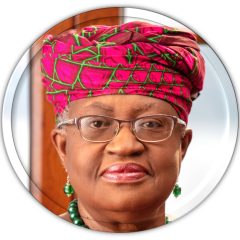
 Dr Ngozi Okonjo-Iweala
Leave a comment