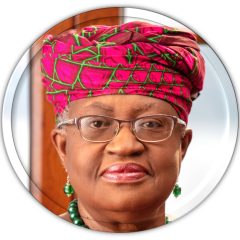
Excellencies, Ladies and Gentlemen.
- Thank you for this immense honour. I am humbled to share this podium with my fellow awardees, present and past.
- We live in what feels like an era of unending crises. Not only do we have to contend with the war in Ukraine, climate change, and threats of more pandemics, every day we wake up to something new: a fatal heatwave or flood here, a bank collapse there. Mass shootings almost every day. Civil wars like the unacceptable conflict in Sudan threaten to spill across borders and engulf entire regions.
- When I talk to young people they are on edge. Instead of hope, there is fear: for a future of uncertain jobs, climate crisis, and geopolitical tensions that could escalate into catastrophe.
- In this kind of world, we all need to sit up and take action. There is still reason for hope – and room to build a more prosperous, more sustainable future for people everywhere. In a world of doom and gloom, we must remember the positives.
- So my message to you this evening is that in our uncertain world, we need multilateralism more than ever. We need places where nations can come together and truly interact – even when they disagree. In fact, especially when they disagree.
- The World Trade Organization is one such arena: a platform where nations – including the United States and China – are able to engage on the trading relationships that deliver benefits to, and connect the lives of, billions of people each day.
- We need to shore up the multilateral institutions we have, instead of taking for granted the services they provide.
- Yes of course these multilateral institutions – the WTO included – need to be reformed to be fit for purpose for the 21st century. But we must bear in mind the good they have done for three-quarters of a century. This cannot be wished away.
- The WTO and its predecessor, the GATT, helped deliver 75 years of what by historic standards has been an era of peace and unprecedented prosperity. Over a billion people were lifted out of poverty, both in China and elsewhere. Trade helped deliver decades of disinflation for central banks, and brought a wider selection of more affordable goods to consumers in the USA and around the world. Yes, there were some job losses, but not all were due to trade. Technology played a large part, as did the failure in some countries to deploy active labour market policies on the necessary scale. In the years before the pandemic, Denmark was spending nearly 2% of GDP on such policies, and Sweden over 1%, compared to only 0.1% in the USA, according to a 2016 brief from the White House Council of Economic Advisors, which noted that US spending relative to the size of the economy had been falling since the 1980s. Moreover, trade cannot be equated with unemployment: in the US today, trade levels are relatively high, but unemployment is at a half-century low.
- Some of our biggest successes at the WTO go almost unnoticed. For instance, our Information Technology Agreement (ITA), which is very popular with the business community, especially the semiconductor industry, has eliminated tariffs on what in 2021 was close to $3 trillion worth of trade in products like servers, manufacturing equipment, computers, and mobile phones. The physical goods and capital investment that power the digital economy would be significantly more expensive without it.
- If we let multilateral fora wither – if we fail to preserve what they are doing well, and improve what needs improving – the costs will be high.
- From our trade perspective, some of these costs are quantifiable. For instance, WTO economists estimate that if the world economy decouples into two isolated trading blocs, it would reduce long-term global GDP by at least 5% from the current trend. That’s a much bigger hit to output than what advanced economies sustained after the global financial crisis – and we know how that played out. Poor countries and their development aspirations would be hit hardest. The IMF has since done similar work, with similar results.
- Other costs of fragmentation cannot be quantified: the loss of a shared basis of interest in solving global commons problems like climate change, or of the institutional practices that help countries reach shared understandings.
- The WTO is doing its part. As we speak, our 164 members are actively working to reform the organization. They have worked across geopolitical fault lines and delivered results. But we need your help to do more.
- Last year, the WTO was one of very few organizations that was able to successfully deliver binding multilateral agreements that respond to global challenges. Everyone signed on – Ukraine, Russia, the US, China, the EU, and so forth.
- At our Twelfth Ministerial Conference, members acted to boost the health of marine fisheries and to ensure export restrictions don’t get in the way of emergency food aid. Their compromise on COVID-19 vaccine intellectual property provided a basis for the efforts of some African countries to start manufacturing vaccines. Members also delivered for the private sector, preserving the predictability of the digital economy by keeping cross-border data flows free of customs duties.
- These agreements demonstrated that the WTO is an arena where governments can advance the strategic cooperation we will need to keep the planet liveable, even as they engage in the strategic competition that is a reality of our time.
- We still have much more to do. One priority is our dispute settlement system. While WTO members continue to use first-tier panels to resolve disputes, the appeals function remains frozen. Negotiators are working hard to address criticisms, but we need to start turning this work into results. You, the stakeholders in this room, can help put pressure on members to get there in time for our Thirteenth Ministerial Conference next February.
- Another pressing issue is the need for transparency about the growing array of industrial and farm subsidies, so that we can begin to address level playing field concerns. With my arrival at the WTO we started work in this area jointly with the IMF, the OECD, and the World Bank even before the advent of the Inflation Reduction Act and the European Green Deal. We should aim to maximize the positive contributions state support can make to building a greener economy, while avoiding a negative subsidy race to the bottom that in the end will serve no one well. Please back our efforts to understand what is happening across the board.
- To conclude, if we are to achieve diversification without decoupling – if we want to mitigate instances of overdependence while preserving the interdependence that has underpinned decades of peace and prosperity – we need a strong, rules-based multilateral trading system that provides a baseline for global trade relations.
- We will continue to work hard at the WTO to move this agenda forward. We need your support to keep delivering change.
- Thank you very, very much. Thank you for recognizing my work and the WTO’s work in beginning a new era of reforms!
 Dr Ngozi Okonjo-Iweala
Leave a comment