International Women’s Entrepreneurial Challenge Foundation
Your Royal Highness Princess Sabeeka Bint Ibrahim Al-Khalifa
Your Royal Highness Princess Noor Bint Asem
Excellencies, ladies – and gentlemen – I am delighted to be sharing this message with you today.
I was excited when I received your invitation to speak here because of the themes you are looking at: connecting women-owned businesses across borders, and helping them make the jump from survival to success.
These issues, and the IWEC Foundation’s work, go to the heart of building a more inclusive global economy. A global economy in which more people are able to benefit from the market opportunities created by the WTO. A global economy in which poor countries, and large numbers of people even in emerging markets and advanced economies, are not left behind.
I will focus my remarks on four topics:
First, why the economic success of women and women-owned businesses matters for everybody.
Second, how the COVID-19 pandemic has set women back.
Third, how trade and connections to global markets are so important for helping women-owned businesses thrive.
And fourth, what the WTO and its partners are doing to help connect women to global markets.
Let’s start by looking at continuing gender inequality in the economy.
Women continue to face higher hurdles than men do in accessing paid work and reaching decision-making roles.
Men and women account for roughly equal shares of the global working-age population of about 5 billion. But only about half of those women participate in the labour force, compared with 80% of men.
According to the ILO, women accounted for 38.5% of jobs worldwide in 2020 – and this share has remained basically constant for 20 years. Women’s share of management jobs in 2020 was 28.3% – not much higher than the 25% registered at the turn of the century.
In developing countries, women tend to be disproportionately employed in the informal sector, with lower wages and fewer job protections. Even in the formal sector, women earn less than their male counterparts with comparable jobs and educational backgrounds.
Once we factor in the disproportionate share of unpaid household and childcare work typically shouldered by women, the result is wider gender pay gaps and under-representation of women in the most lucrative kinds of jobs.
Now let’s look at what this inequality is costing us.
About five years ago, McKinsey estimated that if women participated in the economy on equal footing to men around the world, with equal wages and participation in high-productivity activities, global economic output would be $28 trillion higher over a decade. To put this in perspective, that would today be roughly equal to adding two Chinas to the world economy.
The same report estimated that in a more modest scenario, where countries match regional best practice, the global economy would still add an additional $12 trillion – almost one China – over a decade.
The economic shocks from COVID-19 have no doubt shaken the assumptions that underly these estimates, but the core message remains clear: the economic gains from gender equality would be immense. That’s why Hillary Clinton said “Women are the largest untapped reservoir of talent in the world.”
IMF researchers have estimated that the economic disempowerment of women costs advanced economies about 10% of GDP, and more than 30% of GDP in South Asia, the Middle East and North Africa. Recent work suggests the gains could be even higher, because of the complementary skills women and men bring to work environments.
We will not be able to build back better from the pandemic – to build more prosperous, more sustainable, and more inclusive societies – unless women and girls become more equal players in our homes, our schools, our communities, and our economies.
We need to lower barriers in access to education, jobs, health care, and finance, build social infrastructure for childcare, and equalize the burden of unpaid work.
These are moral imperatives, demanded by basic fairness and justice. And they are social imperatives: the Nobel laureate economist Amartya Sen famously observed that literate fathers sometimes have illiterate children, but literate mothers almost never do. But they are also economic imperatives, since they will raise productivity, boost growth, and better use the talents of everyone.
Micro, small, and medium-sized enterprises are critical for making growth more socially inclusive, because they employ the vast majority of the labour force. When they thrive – when they become more productive, and do business across borders – more people benefit.
When women own businesses, they tend to hire more women, especially at senior levels.
The World Bank Group estimates that as many 38% of MSMEs globally are female-owned.
Women-owned MSMEs are likelier to be smaller, informal, and often home-based. And they are concentrated in services like health, social work, tourism and food service, and beauty treatment, as well as garment, textile, and handicraft manufacturing.
These characteristics would go on to have major implications during the COVID-19 pandemic.
This brings me to my second point. The economic recession and shifts in spending patterns associated with the COVID-19 pandemic have had a disproportionate impact on women.
This has happened along two broad fronts:
Women are over-represented as workers and entrepreneurs in the face-to-face services sectors that have been hardest hit by the crisis: tourism and hospitality, agriculture and food production, education, retail, garment and textile production, and domestic services. These are among the sectors that have seen the highest rates of business closures due to the pandemic, from tourism (54%) to childcare services (45%) and hospitality (32%).
In addition, the pandemic has aggravated challenges women-owned businesses faced before, from their generally smaller size, which means fewer resources to weather crises, to difficulties accessing finance. While many businesses have shifted online during the pandemic, many women-owned businesses were held back by the gender digital divide.
Business surveys from multiple countries and regions point to how the pandemic has affected MSMEs more than larger competitors, with lower cash reserves, and higher rates of layoffs and bankruptcy.
Access to credit, including trade finance, was harder for women entrepreneurs even before the pandemic. And because many women-owned businesses are informal or unbanked, they were frequently ineligible to access government relief programmes designed with the formal sector and existing borrowers in mind.
Women entrepreneurs can often find themselves caught in a negative loop: their small size prevents them from accessing finance and export markets. But this prevents them from diversifying and growing, so they remain small and vulnerable.
We need to break this doom loop. This links to my third point, about the importance of trade for women-owned businesses. It is why the IWEC Foundation’s work to provide market intelligence and foster connections matters so much.
Trade, and the WTO – which establishes clear and predictable rules for global trade – are ultimately means to an end. And that end is about people: about raising living standards, creating jobs, and promoting sustainable development.
When MSMEs and women-owned businesses are able to tap into international market opportunities, more people benefit from trade.
Businesses that export, either directly or as part of larger value chains, tend to become more productive, grow faster, and pay workers more than purely domestic firms.
Research suggests that exporter premiums for wages and productivity are higher for women-owned firms than for those owned by men. There are also indications that exporting firms have narrower gender wage gaps.
But there is also evidence that women-owned firms face higher bars in accessing international markets.
The International Trade Centre, a joint agency of the WTO and the UN, has conducted surveys showing that only one in five of exporting firms is owned by women.
In East Africa, South Asia, and Latin America combined, only 27% of businesswomen export.
Trade costs weigh more heavily on women entrepreneurs than on their male counterparts. Women entrepreneurs, with their smaller businesses, often cannot afford to invest in dealing with customs issues, packaging, certification and standards compliance, and e-commerce.
WTO regional surveys suggest that women entrepreneurs also face a general knowledge gap about trade rules and requirements.
19% of women entrepreneurs do not trade because they have no or very little knowledge of how to export.
The tightening of trade finance seen during the pandemic is hurting women-owned MSMEs especially hard. A recent report from the Asian Development Bank suggested that 70% trade finance applications from women-owned MSMEs were totally or partially rejected by banks.
At the same time, we see examples of how upgrading product quality and connecting to international markets and value chains has been transformative for women in developing countries.
My current favourite case comes from a group of women who run a shea butter cooperative in Nigeria’s Oyo State. I had the chance to meet them when I was back home in March.
The cooperative had worked with the government, the International Trade Centre, and the WTO to meet international safety and quality standards for its shea butter.
Receiving international safety certification opened the door to premium markets in the US, the UK, Europe, the Middle East, and South Africa, as well as high-end market niches within Nigeria.
New markets and higher prices have translated into major income increases for the women in the cooperative. They have been able to send their children on to higher education. They have invested in side businesses.
Or as we might put it today, they built global connections, and went from striving to thriving.
This brings me to my final point, about what the WTO and our partners are doing to lower the bar facing women entrepreneurs as they try to tap into cross-border markets.
I would like specifically to highlight ITC’s SheTrades Initiative, which is working with governments and the private sector to systematically identify and address the full spectrum of barriers holding women back in the global economy. SheTrades is also a platform for women entrepreneurs to connect to each other, as well as to potential customers.
The Nigerian shea butter cooperative is one example of the kind of supply-side work the WTO and its partners are doing to help women-owned businesses seize the opportunities presented by the global economy. I am firmly convinced there is considerable scope to scale up targeted interventions and investments like this, to move from proof of concept to wider application – and impact.
The WTO along with ITC and other partners are exploring the possibility of setting up a [$50 million fund], with 4:1 leverage, to invest in women-owned businesses.
[Together with the International Finance Corporation, we are working on a plan to identify trade finance gaps so that we can overcome them, including those facing women-owned businesses.
The WTO is developing a training programme aimed at women-owned businesses and business associations to help them better understand global trade rules and take advantage of international market opportunities.
In addition, 127 WTO members – more than two-thirds of the membership – are currently engaged in efforts to make the world trading system more supportive of women-owned businesses.
They are working towards a joint declaration to be adopted at our Twelfth Ministerial Conference, which starts at the end of the month. This would call for gender-disaggregated data collection; using research results to inform trade instruments and programmes; bringing a gender perspective to the work of the WTO, and improving the impact of Aid for Trade on women.
Members supporting this prospective declaration also already laying the groundwork for future engagement on enhancing gender equality in global trade.
I am optimistic about this work – I firmly believe the WTO can do more on the rules side, not just the supply side, to close gender gaps in global trade.
In conclusion, ladies and gentlemen, to recover from the current economic crisis and achieve truly inclusive prosperity in the future, we need to empower women to be equal actors in the economy. Trade and the WTO have important roles to play in this story. I thank you for your important work, and encourage you to keep going – and to stay engaged with what’s happening here at the WTO.
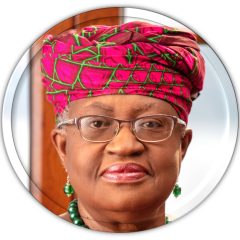
 Dr Ngozi Okonjo-Iweala
Leave a comment