“The 20th Anniversary of China’s Accession to the WTO: Mutual Benefit, Shared Future”
Excellencies, Ladies and gentlemen,
It is an honour and a pleasure to share this message with you.
Twenty years ago next week – on 10 November 2001 – the WTO Ministerial Conference approved, by consensus, the text of China’s accession agreements to the WTO. The following day, China’s then-Minister of Foreign Trade and Economic Cooperation, Shi Guangsheng, presented China’s Instrument of Ratification to my predecessor, Mike Moore. In line with standard procedures, China formally became the WTO’s 143rd Member exactly one month later.
This was a watershed moment – the culmination of nearly 15 years of negotiations with WTO members that produced hundreds of pages of legal text[1][2] and binding commitments that would define the terms of China’s membership in the global trading system.
At the G20 summit in Rome last weekend, I had the opportunity to congratulate State Counsellor and Foreign Minister Wang Yi on the 20th anniversary of China’s accession, and exchange thoughts on the past, present, and future of China’s role within the WTO.
Joining the WTO accelerated China’s internal economic reform processes. The predictable access to foreign markets and suppliers that came with WTO membership gave further impetus to China’s economic rise, helping raise incomes and lift millions of people out of poverty, not only in China but also in China’s trading partners across the developing world.
The numbers speak for themselves. In 2000, China accounted for 3.9% of world exports of goods, and 3.4% of world imports. By 2020, in the midst of the pandemic, China accounted for 14.7% of world exports and 11.5% of world imports. Over that period, the stock of inward foreign direct investment in China grew ten-fold, from about $200 billion to nearly $2 trillion. China has emerged as a major overseas investor in its own right, with outward FDI now worth $2.4 trillion – 84 times the level in 2000. In the 20 years since China’s accession, per capita incomes grew from $3,400 to $16,200, in purchasing power terms, and extreme poverty has essentially been eliminated.
China today plays a central role in global trade, and trade has become essential to China’s economy. China has successfully positioned itself at the core of many global value chains. These production and trade networks have not only provided a lifeline for many countries during the pandemic, they have also increased the quantity, quality and variety of goods available around the world.
Looking back over the past two decades, China’s WTO accession could be seen as nothing less than the completion of the largest trading bridge between China and the West since Marco Polo’s expeditions in the 13th century.
In joining the WTO, China implemented a variety of liberalization measures, from tariff reductions and market-opening in several services sectors, to the elimination of many non-tariff barriers. China’s average applied import tariff in 2001 was 15.6%; this year it is 7.1%. The WTO accession-related reforms complemented China’s ongoing process of opening up to foreign investment[3].
The WTO would not be the World Trade Organization without China. Over the years, China has become increasingly active in all core WTO activities, including trade negotiations, dispute settlement and monitoring. It has taken the lead in various voluntary initiatives, notably the joint statement initiatives on investment facilitation and plastics pollution, and is an active participant in talks on e-commerce and the Trade and Health initiative. China has also dedicated resources to helping newcomers to the WTO learn from China’s experiences to better integrate into the multilateral trading system. It has extended generous support through the China LDCs’ and Accessions Programme.
Today, there are many questions about the WTO’s future – and about what WTO Members, including China, can do to reform and reinvigorate the institution so that it can address the challenges of the 21st century, from the digital economy to climate change.
Minister Shi foresaw the current challenges 20 years ago, when he said “the multilateral trading system could maintain its vitality only by constantly adapting itself to the development and changes of the world economy and by reflecting the interests and requirements of all, including developing countries.”
China’s stature as one of the world’s leading trading powers means that many members have high expectations for China to play a leadership role in the rules-based trading system, and shoulder greater responsibility in efforts to adapt the WTO rulebook to reflect changes in the world economy and meet the needs of all members.
Our Twelfth Ministerial Conference, which starts at the end of this month, will be a key milestone in this process. Concrete results there, in areas such as pandemic response, fisheries subsidies, and agriculture, will show that the WTO is capable of responding to pressing global challenges. China’s support and contributions will be essential, both for reaching MC12 agreements in each of these areas, and in longer-term efforts to revitalize and reinvigorate the multilateral trading system so that it continues to deliver for people and the planet in the years and decades ahead.
[1] Consisting of the Working Party Report and Protocol 124 pages; Goods Schedule 575 pages; and Services Schedule 55 pages
[2] 144 in the Working Party Report and 24 in the Accession Protocol
[3] E.g. adoption of the 2019 Foreign Investment Law which aims to put foreign and domestic investors on an equal footing.
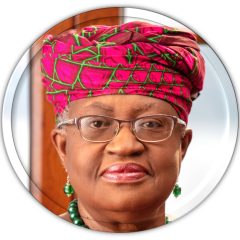
 Dr Ngozi Okonjo-Iweala
Leave a comment