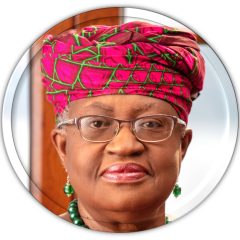
- Your Majesty, Excellencies, ladies and gentlemen.
- [Let me start by thanking you for the invitation, and by recognizing ASEAN’s work to foster dialogue and cooperation and prosperity in East Asia.]
- My brother Dr Tedros has spoken to the health impacts of COVID-19.
- I will focus on the trade and economic aspects of our collective efforts to fight this pandemic.
- The essential problem in the economy is a K-shaped recovery.
- Places with ample vaccine access and substantial capacity to provide fiscal and monetary relief – that is, advanced and some emerging economies – are recovering strongly. Meanwhile, poorer regions are lagging behind.
- The IMF projects that global GDP will expand by 5.9% this year. But output in sub-Saharan Africa, where less than 5% of people are fully vaccinated, is set to grow only 3.7%. Low-income developing economies, where vaccination rates are even lower, are projected to grow by only 3.3%.
- At the WTO we see this divergence being mirrored on trade.
- Our economists estimate that between the pre-pandemic year of 2019 and the final quarter of 2022, Asia’s exports will have grown 18.8%, and North America’s and Europe’s by around 8%, compared to 4.8% for South America, 2.9% for the Middle East, and 1.9% for Africa.
- Ending vaccine inequity is a moral and practical concern, about saving lives and preventing new variants. But it is also a matter of vital importance to assure the sustainability of the global economic recovery.
- The first thing to know is that trade is a central part of pandemic response and preparedness.
- We saw this last year, when, after some initial disruptions, trade became a lifeline for access to medical supplies and food.
- [The value of global merchandise trade fell by 7.6% in 2020, but trade in medical products rose by 16% – and by nearly 50% for personal protective equipment.
- Agriculture trade held stable. We were spared a food crisis during the most acute phase of the pandemic, though rising food prices and falling incomes among the world’s poorest people now threaten increased hunger.]
- Trade is also at the heart of increasing vaccine production and distribution. COVID-19 vaccines rely on specialized inputs and capital goods from multiple countries – as many as 19 countries for Pfizer and BioNTech’s vaccine as well as Moderna’s.
- Financing is not the only constraint on vaccine production. Vaccine supply chains face bottlenecks from export restrictions and regulatory barriers, to shortages of specialised raw materials and personnel. A single obstacle can shut down production lines.
- That is why supply chain issues have featured prominently in the WTO’s work with vaccine manufacturers and international organizations to increase vaccine production and distribution. We are also seeking to encourage donations, delivery swaps, better distribution in country, and to bring COVAX contracts to the head of the queue.
- The WTO’s COVID-19 response efforts cut across three areas:
- First, we are working with manufacturers on an ongoing basis to identify, at a very granular level, key inputs and specific policy bottlenecks. Governments now have a road map for accelerating trade in vaccines and inputs.
- I am pleased to report that the number of export restrictions has come down from 116 to 50.
- We appeal to you to keep lowering trade restrictions and regulatory hurdles.
- We are grateful for the recent progress with India, the US, and the EU relaxing constraints on vaccines and inputs. Manufacturers say this is already making a difference.
- Second, we are actively working with manufacturers on opportunities to make investments and transfer the technology needed to increase production in emerging markets and developing countries.
- There is progress here, as with Pfizer and BioNTech’s announced investment in South Africa.
- I thank the US and the EU for the billions they have pledged to put behind these investments.
- The pre-pandemic status quo, where 80% of vaccine exports came from only 10 countries, failed in a crisis.
- Decentralised manufacturing capacity will pay off for Africa, and for everyone.
- The final area is the proposed waiver of standard intellectual property protections for COVID-related vaccines, therapeutics and diagnostics.
- The formal negotiations on this remain stuck, but informal consultations are intensifying.
- With your support in all of these areas, particularly the TRIPS waiver, we can find pragmatic solutions, and deliver a strong WTO framework on pandemic response at our Ministerial Conference next month. This would allow the trading system to respond nimbly to future health crises.
- Let me end on the subject of preparedness for the next pandemic.
- Lack of preparedness is what forced us to spend $26 trillion dollars and counting to tackle a problem that we could have prevented or contained by investing a few hundred billion before COVID-19 emerged.
- I am part of a G20 high-level panel that identified four key gaps in prevention and preparedness: a lack of globally-networked surveillance and research to detect diseases with pandemic potential through a one health approach; weak national health systems; inadequacy in the supply of medical countermeasures; and cooperative global governance.
- COULD SHORTEN BELOW TO: WE MADE RECOMMENDATIONS FOR PLUGGING THE GOVERNANCE AND FINANCING GAPS, WITH $75 BILLION OVER 5 YEARS
- [We made two main recommendations:
- To raise $15 billion for each of the next 5 years to invest in pandemic prevention and preparedness, through a Financial Intermediary Fund housed at the World Bank.
- To set up a G20-plus Global Health Threats Board of health and finance ministers from G20 and low and lower-middle income countries, together with international organizations.]
- As with the WTO pandemic response framework, this is our chance to get it right for next time.
- If leaders fail to implement the recommendations to prevent or better prepare for the next pandemic, our children will find it hard to forgive us.
 Dr Ngozi Okonjo-Iweala
Leave a comment