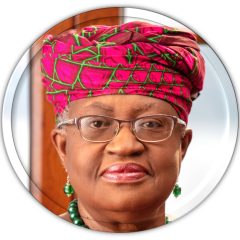
- Thank you. It is an honour to address the participants and audience for this Leverhulme Lecture and Distinguished Experts Dialogue.
- I campaigned for WTO Director-General on a promise to bring a fresh pair of eyes and ears to the organization.
- Many of you have, in your own writing on law and economics, put forward ideas for updating and revitalizing the multilateral trading system.
- I am grateful for your contributions, because ideas matter – in trade policy as elsewhere.
- As all of you know, the GATT’s transformation into the WTO owes an enormous intellectual debt to the work of the late John Jackson.
- Ideas will continue to matter for the trading system’s evolution.
- The WTO’s core mission, remains as relevant as ever: using trade as a means to enhance living standards, create jobs, and support sustainable development.
- The WTO is about using trade to make people’s lives better.
- But while the WTO’s basic purpose remains the same, we face challenges that were not high on policymakers’ priority lists when the Uruguay Round was concluded.
- Climate change had been identified as a danger, but was not yet understood as an existential threat to our lives, livelihoods, social stability, and the natural environment.
- Biodiversity loss had not accelerated to the pace we see today.
- And while infectious disease has been a scourge throughout human history, we had perhaps forgotten about the potential for a respiratory virus to become a global pandemic, devastating economies and demanding global solutions.
- Trade policies have to be updated to respond to these and other new realities. You are part of the conversation among governments, civil society, and the private sector about how to craft appropriate responses.
- New concerns along with growing scepticism about trade in some advanced economies, have perhaps overshadowed how trade and the WTO contributed to sustainable development in the three decades before the pandemic.
- I will devote the rest of my remarks to making four points:
- First, the WTO has made people’s lives better, though many have not shared adequately in the benefits.
- Second, the pandemic is undoing years of progress on development and poverty reduction.
- Third, cooperation on trade is necessary to contain the pandemic and reverse economic divergence and social exclusion.
- And finally, new approaches to trade rules will help foster sustainable development – but they are no substitute for action, including at the domestic level.
- Global trade, underpinned by the multilateral rules framework, has made economies more productive. It has done so by enabling increased competition and the gains from specialization and scale that have come with a wider – if still not truly global – division of labour.
- Trade has expanded consumer choice and lowered prices, improving purchasing power.
- It has accelerated important aspects of sustainable development in reducing costs for green energy technologies, and contributed to greater efficiency in resource use.
- For developing countries in particular, predictably open world markets have been a major factor in rapid growth and job creation.
- Countries with relatively small or poor home markets have been able to use the demand from other countries to shift people and resources out of subsistence activities, and into more productive work in tradable sectors.
- This prosperity-enhancing shift was possible because businesses and investors could be reasonably confident that export markets were not going to slam shut unexpectedly.
- To borrow a phrase from the Nobel economics laureate Michael Spence, trade helped drive faster ‘catch-up’ growth in developing countries by allowing them to import what the rest of the world knows, and export what it wants.
- Faster growth led to remarkable improvements in human well-being. In 1980, close to 40% of the world population lived on less than the equivalent of $1.90 a day. By 2019, it was less than 10%. Trade helped lift a billion people out of extreme poverty.
- This momentum made it possible for the Sustainable Development Goals to target the elimination of extreme poverty and hunger by 2030.
- Trade has also benefited advanced economies. Trade lowers the price of the household consumption basket for low-income families, with one estimate suggesting by as much as two-thirds. The ability to source inputs from around the world helped businesses compete at home and internationally.
- We must acknowledge that not everyone shared in the gains of recent decades. Many developing and least developed countries, particularly in Africa, remained marginal players in global supply chains. Even in advanced economies, some workers and communities were hurt by import competition. These negative effects were in many cases sizeable and long-lasting, especially when unaccompanied by government policies to correct market failures through active labour market policies and social safety nets.
- Nevertheless, if we look at the quarter-century leading up to the pandemic – a period that mostly coincides with the WTO’s first 25 years – it was faster growth in developing countries, not a slowdown in rich ones, that began to narrow the gap in living standards between rich and poor countries for the first time since the Industrial Revolution.
- This trend was starting to falter even before the pandemic, amid rising trade tensions and protectionist measures.
- Today, the evidence increasingly suggests that divergence has returned. Countries’ economic prospects are bifurcating based on inequalities in vaccine access and differences in fiscal capacity to provide economic relief and stimulus. Most advanced economies and China are moving ahead, while most emerging markets and developing economies are lagging behind.
- The World Bank now expects 90% of advanced economies to regain pre-pandemic per capita income levels by next year. But only one-third of emerging markets and developing economies are on track to do so.
- The IMF projects that sub-Saharan Africa’s economy will grow by 3.4% this year – much more slowly than the 6% global average.
- 100 million people have fallen into extreme poverty, most of them in South Asia and sub-Saharan Africa.
- Economic divergence is visible in the trade data, too, with Asia, North America, and Europe on track for much stronger trade rebounds than Africa and Latin America.
- If this trend continues, large parts of the developing world risk social and political upheaval that could plunge countries into a downward spiral of debt distress, reduced investment and production, reduced trade, and economic underperformance that fuels further unrest.
- To jumpstart economic growth and restore the convergence trend, we need vaccine equity. The present inequalities in access, where Africa has received 3.1 doses per 100 people, compared to 71 doses per 100 in developed countries, are unacceptable.
- Trade is indispensable for ramping up the production of COVID-19 vaccines on the scale needed to end the pandemic.
- Key vaccines rely on complex international supply chains: Johnson & Johnson’s vaccine relies on inputs from 12 countries, a number that rises over 15 for the Oxford/AstraZeneca vaccine, and 19 for Pfizer/BioNTech and Moderna.
- I have been urging WTO members to take action across four areas: One, free up vaccine supply chains by lowering export restrictions and facilitating trade; two, work with manufacturers to identify supply chain bottlenecks and ramp up investment in increased production; and three, find pragmatic solutions to issues around technology transfer, knowhow, and intellectual property, to assure developing countries of near-automaticity of vaccine access whilst still incentivizing research and innovation.
- Investing in a more diversified global vaccine manufacturing base, with regional hubs in Africa and Latin America, will be critical for future supply resilience. We have seen first-hand the risks of a world in which 10 countries account for over 80% of all vaccine exports.
- Turning to the wider economy, keeping international markets open would help slow-growth economies tap into faster recoveries elsewhere, which could help return them to a path towards meeting the SDGs by 2030.
- It would also minimize the effects of the supply shortages, logistics bottlenecks, and price spikes we are currently seeing – all of which would be aggravated if businesses and households were compelled to replace all imports with domestic alternatives.
- Some supply chain reshoring is bound to happen, but this is no panacea for resilience: domestic supply chains can also be vulnerable to localized natural disasters or disease outbreaks. Improved resilience comes from better diversification and improved knowledge of supply chain vulnerabilities.
- WTO members have an opportunity this year to reinvigorate the WTO and enhance the predictability it provides to global trade, by delivering results between now and our Twelfth Ministerial Conference in December.
- Decisions on fostering inclusion through assistance to MSMEs and women to enter national, regional, and global supply chains would go a long way towards making trade and WTO rules work better for those who are marginalized. In this regard, the digital economy and e-commerce could help harness the potential of trade to enhance living standards.
- But creating new market opportunities for marginalized groups and businesses cannot replace domestic social, educational, labour and macroeconomic policies designed to cushion the blow of trade and automation, and help workers take advantage of economic change. Differences in countries’ domestic policies have been a key determinant of how broadly the gains from trade are shared.
- The WTO can also contribute to SDG 14.6 on preserving the biodiversity and sustainability of our oceans and fisheries by successfully concluding the fisheries subsidies negotiations this year.
- The fact that this has been going on for 20 years should give all of us pause. The world does not have another 20 years to deal with pressing sustainability challenges.
- It is possible that the prospect of ‘hard’, enforceable legal commitments at the WTO makes members overly wary of discussing trade-related issues where our understanding is still evolving.
- One idea that might be worth exploring for other sustainability issues like climate change and plastics pollution, is the economist Jean Tirole’s notion of ‘regulatory sandboxes’, where new approaches can be tried out, and there is scope for learning by doing.
- ‘Soft’ law provisions could conceivably set out principles, goals, and directions, or possibly voluntary or temporary commitments.
- These could serve to encourage good practice, and establish common measuring sticks.
- Friends, distinguished participants: I have made the case that trade and the WTO are key in solving today’s problems and delivering on the SDGs. My hope and expectation is that in the coming days and months we shall continue by strengthening its monitoring, negotiating, and dispute settlement functions to reinvigorate and reform the WTO to live up to its purpose of people-centred trade.
- Thank you very much.
 Dr Ngozi Okonjo-Iweala
Leave a comment